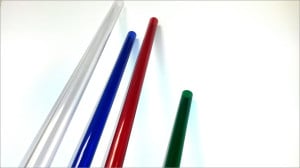


PVC as a technical material: properties, advantages and industrial applications
PVC (Polyvinyl Chloride) is one of the most widely used thermoplastic polymers in the industrial world. Its versatility, durability and mechanical performance make it a key material for manufacturing technical tubes, profiles, mandrels and protective sheaths. Available in both rigid and flexible versions, PVC meets the requirements of various sectors such as construction, automotive, signage, packaging and medical. At ABI Profils, we master the extrusion of PVC and offer custom solutions tailored to the most demanding specifications. Need advice? Contact our teams on +33 4 71 61 29 99 or via our online form.
PVC: a material with outstanding technical properties
PVC is a thermoplastic polymer whose widespread use is justified by its many technical characteristics. It can be formulated as rigid or flexible, making it suitable for challenging environments. Here are its key properties:
1. Excellent mechanical strength
Rigid PVC is valued for its robustness and dimensional stability. It offers very good compression resistance — a major advantage for applications such as mandrels for technical films or industrial tubes.
2. Resistance to chemicals and weathering
One of PVC’s major strengths is its ability to withstand chemical agents, UV exposure and harsh outdoor conditions. The material retains its properties even after prolonged external exposure.
3. Durability and excellent cost-efficiency
PVC is easy to process and economical, offering an ideal balance between performance and cost-effectiveness.
4. Outstanding insulation properties
PVC also provides excellent electrical and thermal insulation. It is therefore widely used in construction, electronics and lighting applications.
Rigid PVC and flexible PVC: two formulations, different uses
At ABI Profils, we work with several PVC formulations to meet specific industrial requirements.
- Rigid PVC: robust and stable, ideal for technical profiles, industrial mandrels and high-strength tubes.
- Flexible PVC: more elastic, used for plastic straps, protective sheaths and certain medical components.
Main industrial applications of PVC
PVC is essential across many industrial sectors thanks to its flexibility and resistance.
1. Building and construction
PVC is widely used in construction due to its weather resistance and insulation properties. Applications include sealing profiles, plumbing tubes, ventilation systems and architectural design elements.
2. Automotive and transport
In automotive applications, rigid and flexible PVC is used for cable protection, seat coverings and interior finishing elements. Its impact resistance and tolerance to temperature variations make it a reliable choice for this demanding sector.
3. POS displays (PLV) and signage
Transparent tubes and PVC profiles are widely used in display units, advertising supports and fixing systems.
4. Medical and paramedical
Flexible PVC is commonly used in medical environments for applications requiring high chemical resistance and perfect hygiene, such as protective sheaths or fluid-transfer tubes.
5. Packaging and logistics
Thanks to its strength and low weight, PVC is widely used for the production of mandrels, storage tubes and protective sleeves in industrial packaging.
6. Lighting and signage
Crystal-clear PVC tubes are commonly used in LED lighting systems, where they ensure even light diffusion while providing mechanical protection.
Manufacturing process and quality control at ABI Profils
At ABI Profils, PVC products are manufactured using a plastic extrusion process, ensuring an optimised, reliable and fully controlled production flow.
- 15 single-screw and twin-screw extrusion lines for high-capacity production
- Co-extrusion and post-extrusion technologies to combine several materials (rigid/flexible, transparent/opaque)
- Custom finishing options: cutting, punching, ink-jet marking, personalised finishing
- Strict quality control: each product is tested to guarantee dimensional stability and durability
Thanks to our expertise, we supply PVC tubes, profiles and sheaths suited to the most demanding environments (construction, medical, transport, aeronautics) with consistent quality and high reliability.
Need an extrusion expert for your PVC products?
Contact us on +334 71 61 29 99 or via our online form for personalised support.
FAQ – Extrusion and manufacturing of PVC tubes and profiles
Rigid PVC is used to manufacture tubes and profiles requiring high dimensional stability and mechanical strength. Flexible PVC, being more elastic, is chosen for applications such as protective sheaths, plastic straps or certain medical components.
Dimensional tolerances depend on the geometry and manufacturing conditions. At ABI Profils, production follows the NFT 58000 – Standard Class, which defines the dimensional accuracy criteria for extruded products. This standard ensures compliance and repeatability while allowing adjustments based on customer specifications.
Several operations can be added:
- In-line: straight or angled cutting, drilling, punching, threading, ink-jet marking (traceability), adhesive application
- Post-extrusion: special cuts, machining, threading, assembly, custom operations
These steps are performed either in-line or in our dedicated post-extrusion workshop to optimise production lead times.
Yes. Some PVC formulations are stabilised to withstand UV exposure, weathering and aggressive chemical environments. These are particularly well suited for outdoor and industrial applications.
Cet article vous a intéressé ? Partagez le :
Nos autres actus
17 September 2025
ABI Profils strengthens its international team with the arrival of Else CARDEN
At ABI Profils, our commitment to international development is a core element of our growth strategy. As part of this ambition, we are pleased to announce the arrival of Else Carden within our sales team. Her international experience will be a valuable asset in supporting ABI Profils’ expansion across Europe.
17 September 2025
PVC Tubes or PP Tubes? Which performance for which application?
In many industrial sectors — from construction to food processing, as well as transport, chemicals and logistics — plastic tubes play a key functional role. Among the most commonly used materials, PVC (Polyvinyl Chloride) and PP (Polypropylene) stand out as leading solutions, each offering distinct technical advantages. Mechanical strength, chemical resistance, weight, cost, thermal behaviour, ease of processing: the choice between a PVC tube and a PP tube depends directly on the application’s technical constraints.
15 September 2025
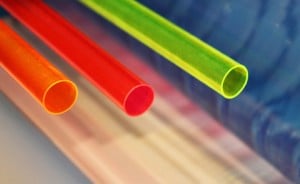
Rigid transparent plastic tubes: selection criteria for industrial use
Rigid transparent plastic tubes are essential in many industrial sectors. They are widely used in lighting systems, signage, medical applications or for design requirements. Their transparency combined with their mechanical resistance makes them indispensable components. But how do you select the right material? Which characteristics should be prioritised to ensure performance and durability in demanding environments?