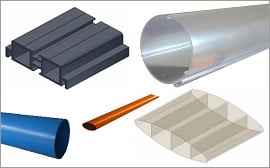


What are the advantages of plastic tubes?
Plastic tubes have become essential in many industries because of their versatility, adaptability and technical performance. At ABI Profils, we design and manufacture custom plastic tubes for a wide range of applications, built to meet demanding technical specifications. So what are the practical advantages of plastic tubes? Here is an overview. Have a specific project? Use our online form or call us on +33 4 71 61 29 99.
Plastic tubes made by ABI Profils meet a broad range of industrial requirements:
- Automotive industry: fluid transfer (coolant, oil), fuel systems, ventilation
- Building and construction: plumbing, heating, electrical cable protection, ventilation
- Medical and healthcare: medical devices that ensure hygiene, protection and regulatory compliance
- Dynamic storage systems: storage structures, rails and automated guidance systems
- Other sectors: POS displays, packaging, sports and leisure, aerospace
With their design flexibility, plastic tubes can be adapted to virtually any technical or functional environment.
Technical properties and material quality
Our tubes are made by plastic extrusion, an industrial process that ensures excellent material homogeneity and high dimensional accuracy.
At ABI Profils, we use more than twelve types of plastic, selected to suit your project’s constraints, including:
- Rigid and flexible PVC
- PP, glass-fibre-reinforced PP (PP GF)
- HDPE, LDPE
- SEBS
- PA6
- ABS
- PS
- PETG
Each material is chosen for its specific technical properties, such as:
- Resistance to corrosion and chemicals
- Resistance to impact and extreme temperatures
- Compliance with food-contact standards (LDPE, HDPE, PP, PS, ABS)
This wide range of materials lets us make tubes that are:
- Flexible or rigid
- Transparent or opaque
- Thin-walled or thick-walled
- Made in custom lengths and shapes
Types of plastic tubes manufactured by ABI Profils
Plastic cores
Used in the medical, food, pharmaceutical and electronics sectors, available in HIPS (high-impact polystyrene), HDPE, PP and ABS.
Flexible plastic tubes
Made in flexible PVC, SEBS or TPU, with diameters from 3 to 80 mm, supplied in coils of 50 to 1,000 m, depending on requirements.
Tubes for road marker posts
Designed for road safety, especially in winter conditions. Available in:
- Impact-resistant, UV-stabilised crystal-clear PVC
- HDPE ECO
- HDPE ECO 2R (reinforced and recycled)
Options: anti-frost caps, Class II reflective strips.
Custom technical tubes
Developed for specific technical, aesthetic or functional constraints, made by single-material extrusion, co-extrusion or post-extrusion.
Snow poles (ski slopes and resorts)
Made from polycarbonate, with excellent impact resistance and durability in extreme weather.
Options: anti-frost caps, conical or helical tips.
Clear tubes
Ideal for light transmission or diffusion, with:
- Internal diameters: 2 to 82 mm
- External diameters: 4 to 120 mm
Food-grade sausage casing tubes
Made from HDPE and LDPE, designed for the French and European food processing industries.
Fire extinguisher dip tubes
Used in powder and water fire extinguishers, made in PVC and PVC-C, with various finishes and diameters.
Paint roller tubes
Made in PVC or PP, with a thermally bonded fibre fabric.
Hoop tubes
Designed for sports and leisure, made from coloured HDPE, available in several diameters, coatings and colours.
Conclusion
Plastic tubes designed by ABI Profils are a reliable, versatile and durable industrial choice.
Their mechanical strength, manufacturing quality, adaptability and regulatory compliance make them ideal for demanding industrial applications.
Have a specific requirement or a custom plastic extrusion project?
Our team is ready to assess your needs and propose the right solution.
Use our online form or call us on +33 4 71 61 29 99.
Enjoyed this article? Share it:
Our other news
17 September 2025
Else Carden joins ABI Profils’ international team
International development is central to ABI Profils’ growth strategy. As part of this ambition, we are pleased to welcome Else Carden to our sales team. Her international experience will be a valuable asset as ABI Profils expands across Europe.
17 September 2025
PVC or PP tubes: which material for which application?
In many industries, from construction and food processing to transport, chemicals and logistics, plastic tubes play a key functional role. PVC (polyvinyl chloride) and PP (polypropylene) are two of the most widely used materials, each with its own technical advantages. Mechanical strength, chemical resistance, weight, cost, thermal behaviour, ease of processing: the choice between a PVC tube and a PP tube depends directly on the technical constraints of the application.
17 September 2025
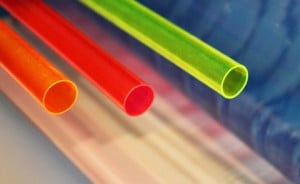
PVC as a technical material: properties, advantages and industrial applications
PVC (polyvinyl chloride) is one of the most widely used thermoplastic polymers in industry. Its versatility, durability and mechanical performance make it a key material for technical tubes, profiles, winding cores and protective sleeving. Available in rigid and flexible grades, PVC meets the requirements of many sectors, including construction, automotive, signage, packaging and medical.