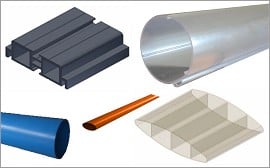


How to choose a PVC plastic core for your industrial production: 5 essential criteria
At ABI Profils, we design custom plastic cores engineered to meet demanding industrial production requirements. These technical components play a key role in the winding of plastic films, textiles, and adhesive materials. A poorly specified plastic core tube can cause deformation, reduced production speeds, and even damage to winding equipment. To support your selection process, here are five essential criteria to consider when choosing a high-performance industrial plastic core that remains fully compatible with your production line.
Choosing the right material for your plastic core
A PVC plastic core is manufactured from polyvinyl chloride, a rigid polymer known for:
- Strong chemical resistance
- Excellent dimensional stability
- Reliable performance in humid environments
PVC is particularly suitable for packaging, textile, and plastic converting industries.
Technical alternatives
Depending on your application requirements, we also offer plastic cores made from alternative materials:
- PP (Polypropylene) — lightweight, resistant to elevated temperatures
- HDPE (High-Density Polyethylene) — robust and well suited to aggressive industrial environments
Our technical specialists can help you identify the most appropriate custom plastic core for your application.
Core dimensions: precision and compatibility
Selecting the correct PVC core dimensions is essential to ensure compatibility with winding systems and to maintain stable process performance.
Internal diameter: matching your winding shafts
Different shaft systems are used in winding and unwinding processes. The internal diameter of the plastic core must match the shafts installed on your equipment.
Each shaft type has specific technical characteristics:
1. Expanding shaft (air shaft)
- Principle: Inflatable bladders or mechanical segments expand using compressed air to lock the core.
- Applications: Plastic films, paper, textiles, metal foils.
2. Mechanical cam or segment shaft
- Principle: Metal segments expand through a mechanical cam system to grip the core.
- Applications: Rigid or heavy materials such as sheet metal or large paper reels.
3. Standard shaft (solid or smooth shaft)
- Principle: A rigid shaft supporting the roll, secured using flanges or clamping rings.
- Applications: Materials where precise clamping is not required.
4. Friction shaft (differential shaft)
- Principle: Uses friction sleeves to balance tension across multiple simultaneously wound rolls.
- Applications: Paper, plastic films, textiles.
5. Tapered shaft (conical expanding shaft)
- Principle: Designed for conical cores, expanding progressively to ensure secure locking.
- Applications: Cable winding or metal wire spooling.
External diameter: load capacity and stability
The external diameter of a PVC core determines load capacity, crush resistance, and unwinding stability.
ABI Profils offers a wide range of standard and custom core dimensions, tailored to strict industrial constraints.
Internal finish: smooth or ribbed?
The internal surface finish of a plastic core affects handling, grip, and winding stability.
Two main options are available:
- Smooth PVC core — enables uniform unwinding and easier handling
- Ribbed PVC core — improves grip and stabilises slippery materials such as LDPE films or lightweight textiles
Each finish is adapted to specific material types. Our team advises based on your process constraints.
Resistance to the production environment
The industrial operating environment directly influences the durability of a plastic core tube:
- In humid or chemical environments, PVC helps prevent corrosion and deformation
- Under high temperatures or thermal stress, PP or HDPE may offer improved resistance
Each industrial plastic core we manufacture is designed to withstand the specific conditions of your production environment.
Cost efficiency, durability, and compliance
A high-quality PVC plastic core helps maximise production efficiency while meeting environmental and regulatory requirements.
- Durability: Designed to resist repeated mechanical loads and reduce downtime
- Recyclability: Available in recycled or regenerated plastic materials to lower environmental impact
- Standards compliance: Manufactured in line with current industrial standards, ensuring reliable and compliant products
At ABI Profils, we combine technical performance, cost efficiency, and environmental responsibility in every custom plastic core.
Your custom PVC plastic core with ABI Profils
Selecting the right industrial plastic core depends on multiple technical and environmental factors. By optimising material selection, dimensions, internal finish, production conditions, and cost performance, you can improve winding efficiency and process reliability.
ABI Profils supports manufacturers in selecting the most suitable plastic core solution.
Contact our team to discuss your requirements and benefit from tailored technical guidance.
Need support? Contact us via our online form or by phone on +33 4 71 61 29 99.
Cet article vous a intéressé ? Partagez le :
Nos autres actus
17 September 2025
ABI Profils strengthens its international team with the arrival of Else CARDEN
At ABI Profils, our commitment to international development is a core element of our growth strategy. As part of this ambition, we are pleased to announce the arrival of Else Carden within our sales team. Her international experience will be a valuable asset in supporting ABI Profils’ expansion across Europe.
17 September 2025
PVC Tubes or PP Tubes? Which performance for which application?
In many industrial sectors — from construction to food processing, as well as transport, chemicals and logistics — plastic tubes play a key functional role. Among the most commonly used materials, PVC (Polyvinyl Chloride) and PP (Polypropylene) stand out as leading solutions, each offering distinct technical advantages. Mechanical strength, chemical resistance, weight, cost, thermal behaviour, ease of processing: the choice between a PVC tube and a PP tube depends directly on the application’s technical constraints.
17 September 2025
PVC as a technical material: properties, advantages and industrial applications
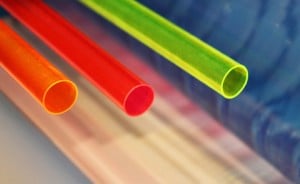
PVC (Polyvinyl Chloride) is one of the most widely used thermoplastic polymers in the industrial world. Its versatility, durability and mechanical performance make it a key material for manufacturing technical tubes, profiles, mandrels and protective sheaths. Available in both rigid and flexible versions, PVC meets the requirements of various sectors such as construction, automotive, signage, packaging and medical.